When will the music industry learn that my generation will never pay for music? Rightly or wrongly, we would rather watch smug marketing minions carry out the dirty work of capitalism's economic powerhouses, spewing their toxic though thoroughly transparent 'deals' at us like parrots as we benignly gawp at our screen of choice before each video, turning Dawn Of The Dead from a satirical 'nothing-this-ridiculous-could-ever-happen' joke into a prophecy.
Incredibly, it works. Someone out there is falling for the "Just £49 per month" spiel from various MDF laminate sawdust specialists chasing our unborn grandchildren's life savings. From contract phones to payday loans, we really will buy anything a self-satisfied advertising parasite spouts through an SM58.
 Except music. That's the line. Nevertheless, Spotify was forced to resort to pitiful grovelling this week when Taylor Swift mysteriously removed her entire musical catalogue from the service - a rather miscalculated move, given the amount of new material she is releasing which (did I mention?) young people will not pay for.
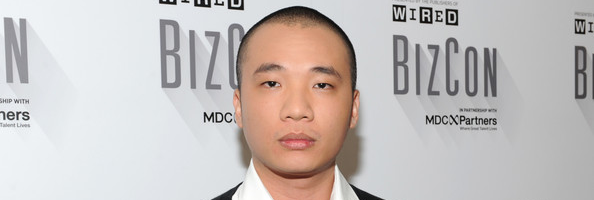
Today we found out why. Not deterred by the 'Good riddance' backlash from her Spotify antics, Taylor has announced she wants us to pay £9.99 a month to listen to her music on youtube without adverts. If this takes off when AdBlock is free, I will give up on my generation. But while Swift is in the firing line, this is in fact the result of some distasteful dealings between Google and this scumbag on the right. Scott Borchetta has made Taylor the face of Google's latest desperate attempt to become musically cosmopolitan. With any luck it will follow enterprises like Google Buzz and Google Wave into oblivion. As for Spotify, CEO Danial Ek fired back at claims he only paid Swift half a million dollars in royalties last year, retorting,
The lesson here? Scott is in a remarkable position. For all the mini-fandom communities on youtube, everyone watches music videos of which he is the puppetmaster. Before him is a consumer base hundreds of millions strong, ready to soak in any consumerist message of his choosing. All he has to do is to take advantage. But =invincibility has got the better of him. By choosing to ride the Google gravy train, Borchetta has returned leverage to the masses. The onus is on us to use it by ensuring as few of us as possible partake in this mugging. May Google Music Key crumble like a £49 per month bedroom.
Fashionable as it has become within the tech spheres of the developed world to think of the masses as subject to the totalitarian surveillance predicted by George Orwell, the exasperating tension between satirising the sinister activities of the world's biggest corporations and continuing to use the services they provide is leading to an increasingly tedious repetitive streak of discontent in the media.
When Facebook introduced it's Messenger app, requiring permission to make and charge for calls automatically and use a device's camera and microphone whether or not the app is in use at the time, news sources rushed to report the injustice we are being subjected too. There is no denying that anyone who has downloaded this app is putting themselves at risk of having their privacy breached but that hasn't stopped more than a billion people downloading the app, despite the uneasy feeling in the back of our minds that there had to be a catch. We can never truly have believed that social media would give us the luxuries we enjoy today at no cost but so far, we have overlooked this.

For now, we still have time to make an informed decision about whether we want to go down this road. If we did want to opt out now, we would have to change our day to day lives drastically. For a start, we'd have to delete everything - Facebook, Twitter, Google, Skype - they're all at it and even if the web didn't catch you, 95% of UK residents use loyalty cards which track our shopping habits. We really would have to thoroughly disconnect ourselves from almost anything that makes life convenient.
This is not a crusade. Whether or not we continue to allow these organisations to access our data is neither here nor there to me but given that I will be affected as much as anyone if we don't take the necessary steps to prevent the inevitable, I'd quite like to know that, rather than drifting towards 'Big Brother' like lambs to the slaughter, we decided our fate, weighing up the loss of our privacy against the convenience of these services.
The brilliance of getting rid of all the techy stuff we take for granted is that capitalism would kick in and within a matter of weeks, new gadgets would become available to meet the demand. Indeed, some alternatives are already out there, waiting to be discovered. For instance, I have taken to searching the web with DuckDuckGo, who make a point of not storing users' data. As consumers, we have more choice than we think.
 But the time to make that choice is now. Today, GSMA have released figures which estimate that there are 7.22billion gadgets on the planet, 200million more than the world's population. Once we all start using devices like Microsoft's Surface Pro 3, which advertises itself as "The tablet that can replace your laptop", it will be all too easy to introduce default apps which can't be deleted and have all the permissions people claim to be worried about today.
In short, the media has said what it has to say on the matter. Now, journalism at large will simply repeat itself, reporting scandal after scandal until we either change our ways or let our phone watch and listen to everything we do while charging us for the privilege.
 Candy Crush is excruciatingly addictive. This is blindingly obvious to those of us who play it but it is always amusing to observe the doubtful look crossing the face of somebody who's never set eyes upon it. 'Takes over your life does it?' they judge, as a player tries to find the words to express the dazzling allure of those brightly coloured sweets, the endless toil of making it to the next level and the numbing sensation as real life becomes a distant memory and Aunt Jean's birthday card lies half-written on the coffee table.
At a time when banks, restaurants and other tangible businesses are facing economic instability, this game's developers, King, have built a company currently worth around £2.6billion. The result has created an abundance of games designed to keep us glued to our phones. Independent app developers have never had a better chance to shine.
The latest star to burst onto the scene is London based web developer Matt Jewell. He's been hard at work creating apps for the likes of Volvo, Coca Cola and Virgin Media for more than three years but his latest creation, Piggy Break, is a real teeth-grinder.
Like most of the successful games to have emerged over the last two years, this one shares two main attributes. Firstly, it is incredibly simple, so much as to be reminiscent of Flappy Bird, whose creator, Dong Nguyen tried to make his game as simplistic as possible, telling Rolling Stone it was designed for commuters with 'one hand holding the train strap'. Secondly, most developers know the easiest way to keep us playing is not to give us a natural place to stop.
Those piggies are definitely hypnotic. Though Dr Danial Noble predicted in 1854 that the swinging effect of a pendulum would have 'wider applications', could he ever have imagined virtual china pigs swerving around chainsaws?
Personally, I've had to take drastic measures, just as I did with Candy Crush, to stop this game taking over my life. Yes, I've deleted the app (with a measly best score of 27) but I hope Matt's success continues. As far as I know, the world record so far belongs to Mike from Tamworth with 89. Let me know if you can do better.
 As over 7000 excited pioneers of 21st century television prepare to cram into LA's Nokia Theatre on Monday, Don Mischer has already promised us more 'tight races' than ever before. The producer of the 66th Emmy Awards told Variety 'We have some of the greatest television stars...great movie stars, even some rock stars that are going to be part of the programme'.
Incredibly, though two decades worth of ceremonies have taken place in my lifetime, I have barely even heard of this cultural phenomenon. The name Emmys has vaguely crossed my mind on occasion but other than that, I wasn't familiar with them in the slightest. This made me wonder, what have I missed? What does this event represent, not just to winners and nominees but to ordinary people? What on earth could have compelled more than 17million global viewers to tune in last year?

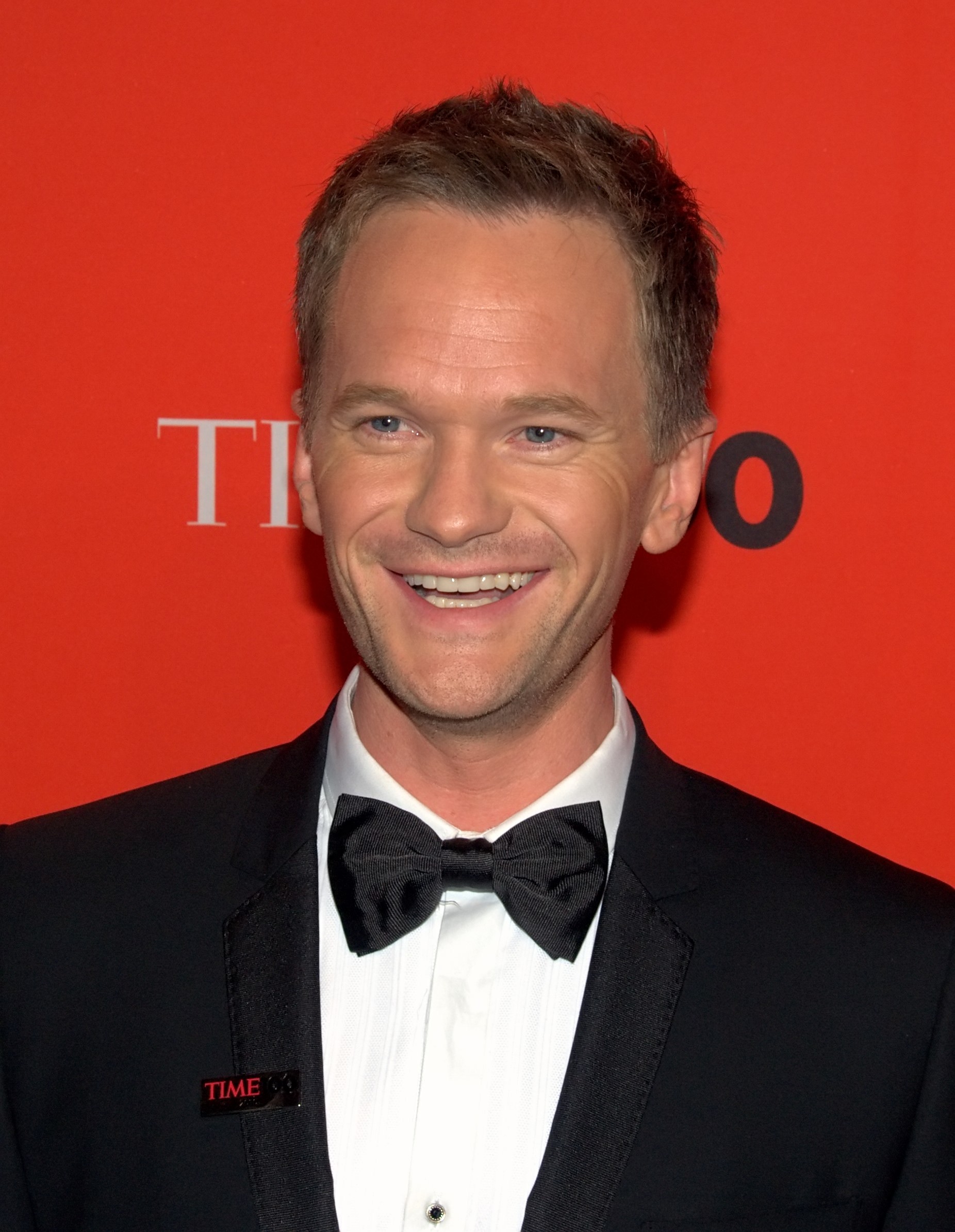
Taking a look back to 2013's show reveals a sparkling array of the most talented actors in television, not least one of my favourites, Neil Patrick-Harris who hosted the evening. With so many massive names on the guest list, its not surprising that the event is so prestigious but is this alone really enough to warrant the awards their biggest audience since 2005?
Television columnist Lisa de Moraes suspects a major contributing factor to the ratings last year was CBS's decision to schedule the broadcast directly after a national American football game between the Buffalo Bills and the New York Jets. If true, did Kelly Kahl, who oversees scheduling (among other things) at CBS, decide the Emmys don't mean enough to the average viewer for them specifically to tune into the ceremony? Rather, it has to be on incidentally, drawing us in with recognisable faces and sparkling lights?
It is certainly the case that during the previous two years, Fox and ABC had far smaller audiences and that 2005's ceremony, which pulled in more than 18million viewers, was also shown on CBS. That year, the ceremony was preceded by American football as well which could further indicate that ordinary people don't 'turn on' the Emmys so much as they decide not to turn them off.
 In which case, how big are the Emmys really? There's no denying that 17.6million viewers watching from beginning to end is impressive. It's also worth noting the 22.4million viewers who caught as little as six minutes of the broadcast. Could it be that more people have it on because it's there than because it's prestigious? If so, what does this tell us about what can be gained from the ceremony?
Well the actors certainly gain a lot from the night. Their had work is recognised by peers from across the industry. They experience at the very least an enjoyable evening with friends and a free show, at best, the ceremony can provide a defining moment in their careers and even a shiny new trophy to add to their collection. No one could dispute the significance of the occasion for everyone nominated and the thousands of others who fill the theatre each year and it is truly heartwarming to watch the reactions of those who receive an award.
Then there are the viewers. Millions of people around the world actively look forward to the Emmys each year. I considered myself a telly addict until I ventured onto some Emmy forums and discovered the full extent of fanaticism among the hardcore fanbase. Meanwhile, many more passive viewers watch with interest, taking from it what they wish simply because it happens to be on.
Finally, there are the advertisers. The potential reach of 40million is, of course, invaluable but, as people in the industry will tell us, advertising works best when presented to us subconsciously. That's why radio stations put so much effort into having a 'uniform sound' - that is to say, they want to broadcast audio which mostly sounds as similar as possible all day and all night. They want everything to be broadcast at a similar volume and the same types of sounds (perhaps sound effects for music stations or constant speech on talk radio). This is partly because it sounds better but mainly because once you've created that consistency, people are more likely to listen all day and crucially, many will hear the output without listening. The station provides a warm, familiar noise but any information will stay with the listener subconsciously.
 Subliminal advertising on TV has been illegal in the US since 1958 but if the viewer is only half listening and hears the same adverts over and over again, it is likely that a heavily advertised brand will stay with them. The Emmys 2013 was broadcast on Sunday evening, meaning a significant number of those 40million viewers could have gone to bed, possibly dreamt about one or more of the brands woven into their subconscious and had that brand in their brain when in a store the next day. There are any number of similar possibilities but to an advertiser, 22million half-listening viewers is an incredible opportunity.
This isn't an attempt to dissuade people from watching the Emmys. I thoroughly enjoyed last year's ceremony. More than anything, I just find it interesting that ultimately the public, the TV networks and even the casts and crew members of TV shows are all pawns in a strategy being executed, deliberately or not, by advertisers in the name of capitalism. This isn't about 'fighting the establishment' or 'empowering the masses', its simply a fascinating process to watch.
A lot can happen in 109 days. I never would have thought it possible to become as fulfilled as I am now in such a short space of time. Slumped in the confines of the British Library, racing their rather unnecessary 8 o'clock deadline, I couldn't have imagined the comparison I'd be able to look back on. The process of stepping back from it all and experiencing a complete psychological reboot has been refreshingly slow but it seems I am finally ready to get these articles going again.
The last three and a half months have played an essential part in calming life down and I'd recommend to anyone the process of stepping back from it all and working out what exactly is the motivation behind the current main component of life. What is the purpose of the job, course or task that takes up most of the day? In what way is it helping create or at least lead in the direction of a fulfilling life?
In addition to answering these questions, the past few months have also involved a tremendous amount of intrinsic value. It's hardly my place to tell you my photos are any good but while there's always room for improvement, I've found myself noticing far more frequently, those moments which will create that gripping shot. The most important thing is that Bellitudo never stops growing and becoming better than what it used to be in one way or another.
The same goes for my new online broadcast. I choose that word with great care - not quite a radio show, certainly not a TV show and accessible to anyone at anytime on any device. Quite apart from the prospect of the possibilities in store, it is exhilarating to wake up five days a week knowing something good will happen today.
So there it is, an incredibly self centred return to the world of articles - well I was hardly going to ignore more than 15 weeks' absence. But being out of London has definitely made me more focused and hopefully Bellitudo and Slothitude will show this. The main reason for this article though was to provide context. I spent two years in the capital doing everything I could to compelte tasks to the best of my ability but with all the will in the world and an unquantifiable amount of assistance from a series of incredible individuals who have each changed my life beyond recognition, finding peace has allowed me to truly begin to strive.